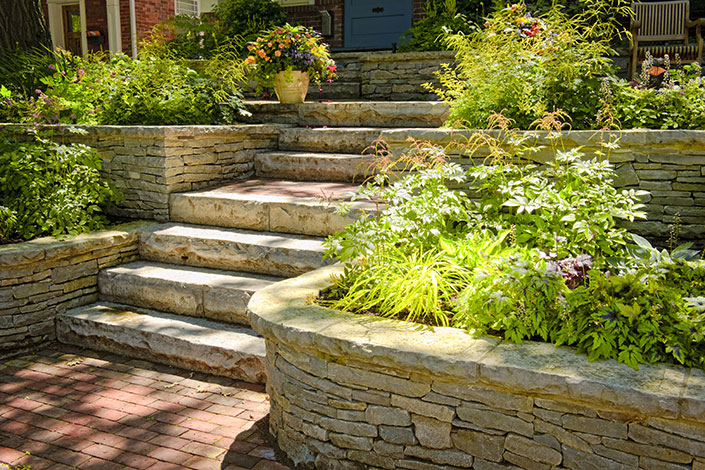
Retaining walls are not only functional but can also be a visually appealing addition to any landscape. They are crucial for managing soil erosion, creating usable flat areas on hilly landscapes, and enhancing the aesthetic appeal of outdoor spaces. This guide aims to provide a comprehensive understanding of retaining wall installation, focusing on the key steps and considerations involved in the process.
Understanding Retaining Walls
What is a Retaining Wall?
A retaining wall is a structure designed to hold or retain soil behind it. These walls are used to prevent soil erosion, manage water drainage, and create functional outdoor spaces in sloped areas.
Types of Retaining Walls
- Gravity Walls: Use their weight to hold back soil.
- Cantilever Walls: Made of reinforced concrete and designed to withstand heavy loads.
- Sheet Piling Walls: Suitable for tight spaces and soft soil.
- Anchored Walls: Reinforced with cables or other supports anchored in the rock or soil behind them.
Key Considerations Before Installation
Assessment of Site and Soil
The first step in the process is assessing the site and soil conditions. This involves understanding the type of soil, drainage patterns, and the slope of the land. A thorough assessment ensures that the retaining wall is designed to meet the specific needs of the location.
Design and Material Selection
Choosing the right design and materials is crucial for the durability and effectiveness of a retaining wall. Common materials include concrete, stone, brick, and timber. The choice depends on factors such as the wall’s purpose, budget, and aesthetic preference.
Steps in Retaining Wall Installation
Planning and Permits
Before installation, ensure that all necessary permissions and permits are obtained. This is particularly important for walls over a certain height, as they may require engineering approval.
Excavation and Foundation
- Excavation: The site is cleared and excavated to prepare for the foundation.
- Foundation Preparation: A strong foundation is essential. This often involves laying a gravel base for drainage and stability.
Wall Construction
Once the foundation is ready, the wall construction begins. This includes placing the chosen materials according to the design, ensuring each layer is level and secure.
Backfilling and Drainage
- Backfilling: The area behind the wall is filled with gravel or soil to provide additional support.
- Drainage Solutions: Proper drainage systems, such as weep holes or perforated pipes, are installed to prevent water buildup and pressure on the wall.
Maintenance and Longevity
Regular Inspection
Regular inspections are essential to ensure the retaining wall remains in good condition. Look for signs of wear, such as cracks, bulges, or water pooling, and address any issues promptly.
Preventive Measures
Implementing preventive measures, such as reinforcing the wall with additional support or improving drainage, can enhance the wall’s longevity and effectiveness.
For professional advice and services, consider consulting with experts in retaining wall installation to ensure the best outcomes for your landscape projects.